Choosing where to store your RV is one of those decisions that feels simple until you realize how much is riding on it. A Class A motorhome can represent $100,000 or more in value, and a travel trailer or fifth wheel isn't far behind. In a place like Calera, where summer UV index levels regularly hit 10 or 11 from June through August and Shelby County sits squarely in Alabama's severe weather corridor, the gap between outdoor, covered, and enclosed recreational vehicle storage isn't just a matter of price — it's a matter of what you're willing to leave to chance.
Here's an honest look at each option, what it protects you from, and how to figure out which one fits your rig and your situation.
Outdoor storage puts your RV on a paved or gravel lot with nothing between it and the Alabama sky. It's the most affordable tier, and for owners who pull their rig out every few weeks or keep it covered with a quality breathable fabric wrap, it can be a perfectly workable solution.
The challenge is the environment. Calera's summers are relentless — daytime highs sit in the low 90s for months at a stretch, and a roof baking under direct sun for an extended season accelerates the breakdown of sealants, caulk, roof coatings, and the clearcoat over your exterior graphics. Tire oxidation is a real concern too. Tires left stationary under intense UV exposure can develop sidewall cracking within a single summer, especially if the rig sits without being moved for sixty days or more.
Storm exposure is the other factor worth considering. Shelby County averages around 56 inches of rain annually, and the stretch from April through September brings regular severe thunderstorm watches along the I-65 corridor. Hail, wind-driven debris, and falling tree limbs are all genuine risks for anything parked in an open lot without overhead protection.
Outdoor storage makes the most sense for owners who use their RV frequently, have a quality cover, and are comfortable checking on the vehicle regularly through the hotter months.
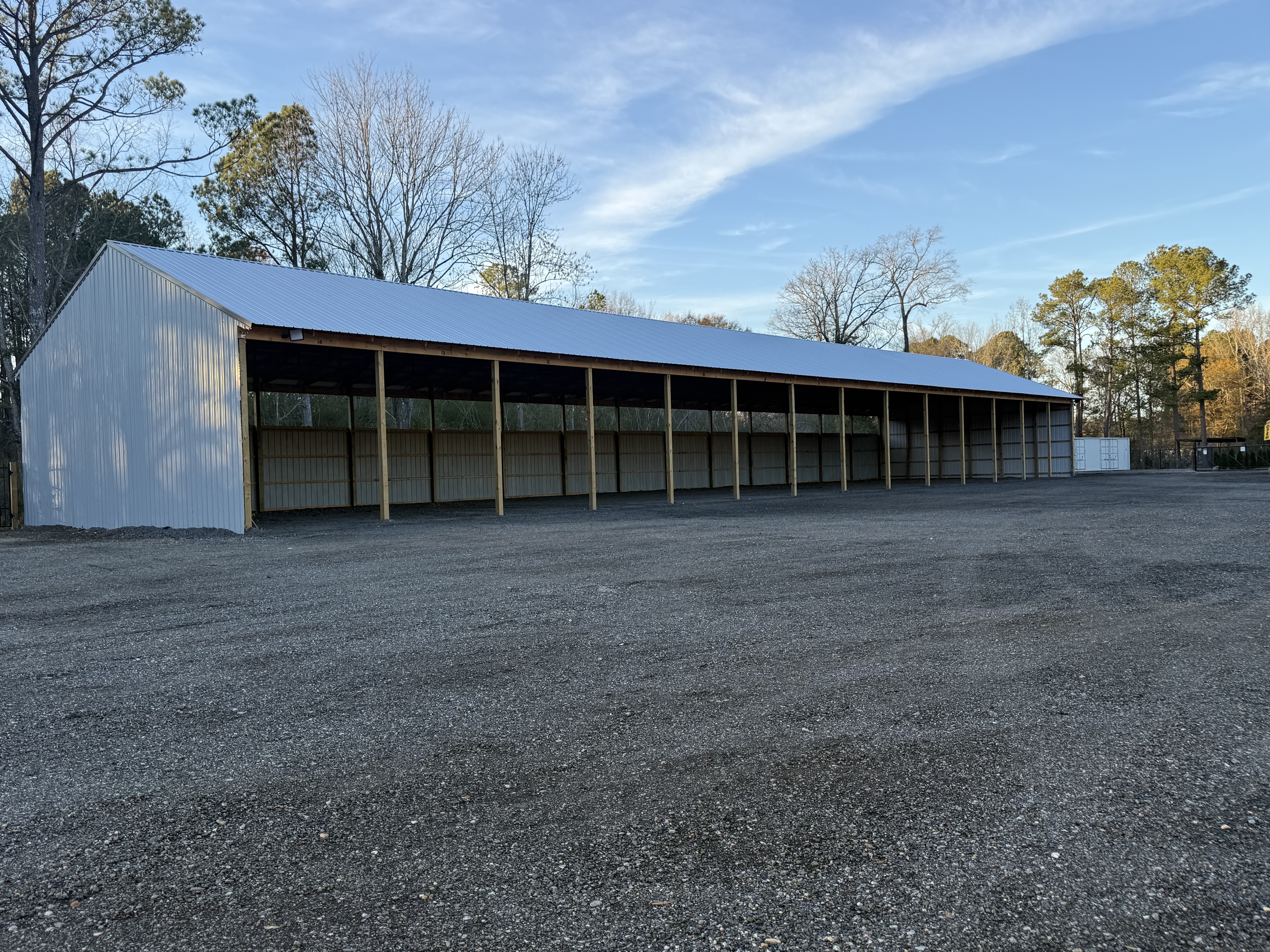
Covered storage — a carport-style structure with a roof and open or partially enclosed sides — closes most of the gap between outdoor and fully enclosed motorhome storage at a fraction of the cost of a walled unit. For a lot of RV owners in the Calera area, it lands in the sweet spot.
The overhead roof is the most consequential feature. It eliminates direct UV exposure to the roof, which is where the most expensive damage tends to occur — delamination, sealant failure around vents and air conditioning units, and membrane degradation all begin from the top down. It also keeps the interior temperatures meaningfully lower during storage, which reduces strain on rubber gaskets, window seals, and any electronics or appliances left in the coach.
Rain and hail protection are the other immediate benefits. A covered structure won't stop wind-driven rain from reaching the sides of your RV, but it will keep the roof dry and prevent the kind of standing water and debris accumulation that leads to leaks going unnoticed between visits.
For owners who store their rigs for the full off-season window — roughly November through February for most Calera-area campers who follow the Cheaha State Park crowds — covered recreational vehicle parking offers a meaningful step up in protection without the premium of a fully enclosed unit.
Enclosed storage places your RV inside a fully walled and roofed structure, typically with a roll-up or swing door. It represents the highest level of protection available and the highest monthly cost, and for certain owners and certain rigs, it's the only option that makes real sense.
The case for enclosed motorhome storage is straightforward: it eliminates every form of weather exposure simultaneously. UV, rain, hail, wind, pollen, bird activity, and storm debris all become non-factors. The interior temperature is more stable than a covered structure, which matters considerably for rigs with slideout seals, residential refrigerators, or any technology components that are sensitive to repeated heat cycling. Enclosed storage also provides the strongest deterrent against theft and vandalism — a factor worth weighing seriously for high-value Class A diesel pushers or luxury fifth wheels.
Owners who store their RVs for extended periods, who have a rig approaching or exceeding $150,000 in value, or who simply want to pull it out in the spring knowing it looks and functions exactly as it did when they parked it in the fall tend to find the cost of enclosed storage easy to justify.
The honest answer is that the right choice depends on three things: how long your rig will sit, what it's worth, and how much peace of mind matters to you. If you're parking for a week between camping trips, outdoor is fine. If you're storing from Thanksgiving through spring and your rig represents a significant investment, the math on covered or enclosed storage starts looking very different.
Weather-related RV damage in Alabama is cumulative. A single season in outdoor storage rarely produces catastrophic results — it's the third and fourth summers of UV exposure to an unprotected roof membrane that create the $3,000 repair bill. Choosing a higher tier of protection now is almost always less expensive than the deferred maintenance it prevents.
If you're ready to find the right fit, explore our RV storage options in Calera, AL and reserve your space online in minutes-keep in mind we also offer self storage units. The South Calera Storage facility sits just off Exit 228 on I-65, making drop-off and pickup straightforward whether you're heading toward Birmingham or south toward Clanton.
Whatever you're storing and however long it'll sit, the right level of covered vehicle storage is out there — and getting that decision right from the start is the kind of thing you'll appreciate every time you hit the road.
